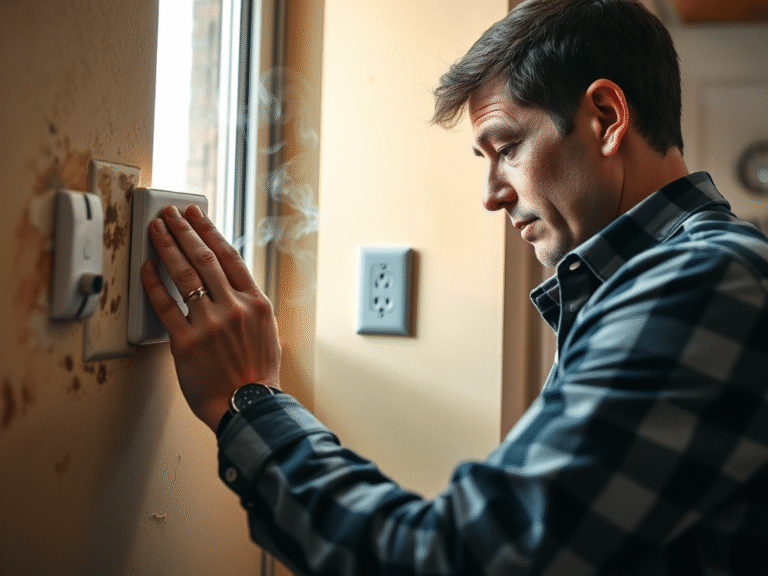
Why We Do Not Use Ozone Generators On Vancouver Island: Victoria, Cowichan, Duncan, Nanaimo, Parksville, Qualicum, Courtenay, Comox, Campbell River, and Port Alberni
What is ozone?
As you may know, ozone is a gas. Ozone molecules have three oxygen atoms (O3), unlike the oxygen in the air that gives life to the planet (O2). Ozone is powerful because the extra oxygen atom can easily escape and attach to other substances. This highly reactive quality can potentially alter the chemical composition of some substances in the air and affect our cells if we breathe it in.
When you hear the term “ozone” you may think of the ozone layer, which protects all life from the dangerous UV radiation of the sun. This is the “good” ozone that is present in the stratosphere. But the ozone at ground level is “bad” since it is hazardous to health and is classified as an air pollutant by the EPA. Ozone at the ground level is created in nature by the interaction of sunlight with certain chemicals that are released to the environment, including vehicle and industrial plant emissions. It is also created when lightning strikes, which is why you may be able to smell ozone after a storm. Ozone, whether pure or mixed with other chemicals, can be harmful to health.
Is ozone bad for you?
Yes, whether ozone is mixed with other chemicals or in pure form, it can be harmful to your respiratory system when inhaled.
Since the early 20th century, health professionals have warned about the dangers of ozone. Just as it reacts with substances outside of the body, it can react with the living tissue within your body. This means that ozone can cause a variety of health problems, like coughing and airway inflammation. It can also reduce lung function and harm lung tissue. Certain groups like children, people with asthma, and older adults are especially vulnerable.
Canada advises against using ozone generators in homes. They are sold as indoor air cleaners, but the level of ozone they produce may harm your health. They also create other dangerous chemicals.
You may have heard of the Clean Air Act in the USA. Under this federal law, the Environmental Protection Agency (EPA) sets standards for outdoor air quality to protect public health. There are six air pollutants that the agency has set standards for, and ozone is one of them. If ozone is dangerous enough for the EPA to monitor outdoor levels, then it is all the more dangerous for ozone generators to release pure ozone into your home.
For context, the US Food & Drug Administration (FDA) requires that indoor medical devices can only produce a maximum of 50 ppb (parts per billion) of ozone. The National Institute of Occupational Safety and Health (NIOSH) recommends that indoor ozone levels should not be greater than 100 ppb.
California has banned ozone generators.
What are ozone generators?
Ozone generators, also referred to as ozone machines, are ozone-generating devices that intentionally produce ozone gas. When sold as air purifiers to be used in indoor occupied spaces, they are marketed to be safe and effective (though these claims are generally false). This article discusses devices that produce ozone on purpose and not as a byproduct. Ionizers and electrostatic precipitators end up producing ozone as a byproduct as a result of their internal mechanisms.
You may have heard about ionizers. They used to be quite popular and were often used in homes to clean the air and eliminate odors. However, in the spring of 2005, Consumer Reports Magazine exposed the units as potentially doing more harm than good–it was found that several of these devices could produce harmful levels of ozone. Though ozone is a byproduct of these ionizers, and tends to be produced at a lower level than ozone generators, the federal government began a stricter regulation process for any air purifier that produces ozone, whether intentionally or as a byproduct.
No federal agency has approved the use of ozone generators in occupied spaces, and the California Air Resources Board (CARB) has very strict regulation for air purifiers sold in California to make sure that harmful ozone levels are not being produced.
How do ozone generators work?
Diagram of how ozone generators work as air passes through the machine
Ozone generators apply a electrical charge to the air that passes through. This splits apart some normal oxygen atoms into unstable single atoms, which bond with other O2 molecules to form O3.
Ozone generators produce ozone by breaking apart oxygen (O2) molecules into single atoms, which then attach to other oxygen molecules in the air to form ozone (O3). They accomplish this in one of two ways, according to the International Association of Certified Indoor Air Consultants (InterNACHI).
Ozone generators work by:
Silent corona discharge: These machines use electric discharge to produce ozone by splitting the normal oxygen molecules in the air into single atoms. These atoms then attach to other O2 molecules in the air to form ozone (O3).
Ultraviolet radiation: This process of ozone generation is similar to how the sun’s ultraviolet radiation splits O2 to form individual oxygen atoms. According to InterNACHI, this process is considered to be less efficient than corona discharge.
Why are ozone generators used to purify the air?
If ozone is so dangerous, then why would anyone use it to purify the air inside a home? As discussed above, ozone is highly reactive and can change the chemical composition of some substances in the air. This principle forms the basis of manufacturers’ claims.
Companies who sell ozone generators may suggest that ozone is a healthy kind of oxygen, using terms like “activated oxygen” or “pure air,” though ozone is actually a toxic gas that is not the “same as air” like manufacturers may claim. Ozone-generating devices are often marketed as odor removers. Ultimately, they are used to remove organic compounds from the air. However, given its danger to health, it would be wise to use an ozone generator only if there are clear benefits.
How effective are ozone generators?
Manufacturers’ claims
Manufacturers say that the highly reactive nature of ozone allows it to easily attach to pollution, especially odorous compounds like smoke and organic matter such as viruses, bacteria and mold spores. However, these claims are not backed up by sound science.
Performance against mold and bacteria
Research has found that ozone generators were not effective at stopping mold or bacteria growth in a standard hospital room, and would require unsafe levels of ozone to do the job at all (Dyas, Boughton, & Das, 1983). For mold growth, public health departments do not recommend using ozone generators for clean-up, saying that ozone even at high levels cannot control mold.
Performance against VOCs
You may be asking yourself, if ozone gas is effective at anything, it should work on other gaseous pollutants (specifically volatile organic compounds, or VOCs) right? Well, it might not, unless you wait for thousands of years in some cases. A research study (Boeniger, 1995) analyzed how long it would take to remove 14 of the most common organic compounds found in the air. It was found that at ozone concentrations of 100 ppb, it would take 880+ years for six of these pollutants to be broken down into half of their initial concentrations (half-lives). In fact, it would take more than 4,400 years for formaldehyde! Only one pollutant, styrene, was found to have a half-life of about 4 hours.
Performance against particulates
You must remember that ozone generators do not remove particulate matter like dust or pollen (which are often allergens) from the air.
The Unitied States of America EPA’s conclusion about effectiveness
The EPA concludes from a review of scientific research that at concentrations that meet public health standards, ozone is not very effective at removing indoor air contaminants.
Can ozone generators remove odors?
Air freshener spray – can ozone generators remove odors
The million dollar question for you might be whether ozone generators can remove odors from the air. That at least is what manufacturers claim to be the most common use for ozone generators in homes.
However, the evidence is mixed as to whether ozone generators can remove most odors from the air. As mentioned above, ozone generators may not work efficiently at all for gases, namely volatile organic compounds (VOCs), as it could take hundreds of years for this process.
Yet, some research reviewed by Britigan, Alshawa, and Nizkorodov (2006) has shown that ozone may be effective for certain types of VOCs (namely, those containing unsaturated carbon-carbon bonds). These types of VOCs are found in cooking oils, air fresheners, cleaning agents, etc. However, there is a big downside: other dangerous byproducts like formaldehyde can be released into the air when ozone reacts with these substances.
Here is another important point: What you might perceive as odor removal may just be facade. Odors in a room could be masked by the smell of ozone being released into the air. Many people who use ozone generators like the smell that is produced, describing it as a “clean sheet smell” or the smell of clothes fresh from the dryer (EPA, 1995).
What are the safety precautions of ozone generators?
Ultimately, you need to know that no agency of the federal government has approved using ozone generators in occupied spaces. If you must use one or have no choice in a certain situation, you should take every measure possible to make sure they are never used when people or animals are present in the room. Plants also should be kept outside of the area.
Many times, if ozone generators are used, they are used for commercial cleaning in hotels, cars, etc. Many hotels use them inside a room just before new guests arrive, which can be harmful because of any residual ozone that lingers in the air. Manufacturers of ozone generators recommend they only be used by trained professionals for odor removal, and that all other steps, like cleaning the area and removing any sources of the odor, should be done first.
What are some better solutions?
We can reduce and eliminate odor by neutralizing the source…the bacteria, pollutants, mold, spores and mycotoxins by applying our eco-friendly, safe chemical into your home, attic, crawlspace, or basement. Depending on the job, we apply our formula by spray, mist, foam, fog, or thermal fog. We do not use a tent. The average time of our on-site service is approximately one hour. An additional four hours is required to achieve maximum effectiveness. We ask that you stay out of the premise for approximately 5 hours in total. Read more about how we work.
Pacific Decontamination Services can reduce odor. We use the world’s strongest, most effective and safe antimicrobial disinfectant, deodorization and chemical decontaminate. Our professional application will eliminate up to accepted levels of any allergen, germ, mycotoxin, bacteria or fungus that it touches. AND as powerful as it is, it is also completely safe.
What do you do next?
Call Pacific Decontamination Services at 778-269-0208 or email us!
Serving All of Vancouver Island: Victoria, Cowichan, Duncan, Nanaimo, Parksville, Qualicum, Courtenay, Comox, Campbell River, and Port Alberni