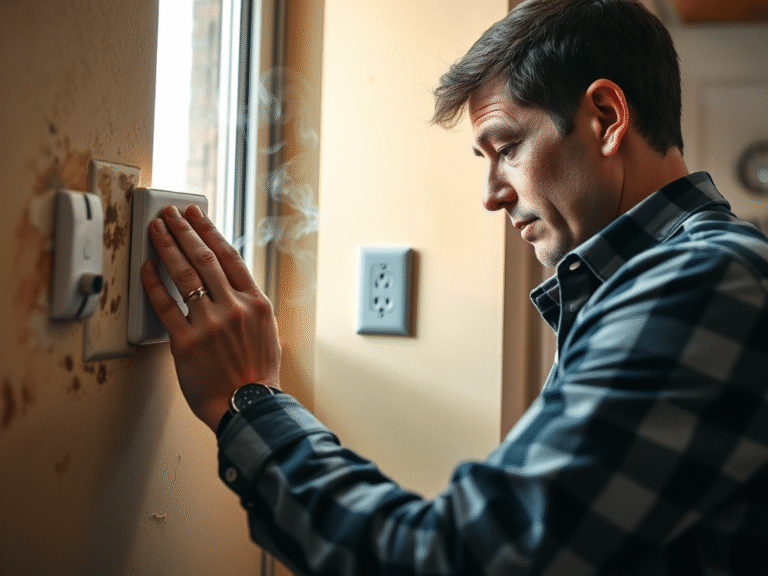
How to Avoid Condensation Problems in Duncan, Cowichan, Ladysmith, Nanaimo, Parksville, Qualicum Beach, Port Alberni, Courtenay, Comox, Campbell River or anywhere on Vancouver Island.
Have you ever noticed water droplets on your window or black staining on the drywall of your walls? Have you ever wondered why the moisture returns around your windows after you have wiped it away? This type of moisture is from the interior air and is commonly referred to as condensation.
Condensation and How Does it Form?
Condensation occurs in your home when moist air encounters a surface at a lower temperature. Moist air contains water vapor, commonly referred to as humidity. Indoors, we can increase humidity through our activities and lifestyle. If a surface in your home is cold enough, the air in the immediate vicinity of the surface will be cooled, sometimes causing the moisture in the air to condense or change into a liquid on the surface.
Condensation forms first on the coldest surfaces of a room, usually on glass surfaces of windows and doors. These surfaces are typically cooled by lower exterior temperatures during the winter months much more easily than the walls kept warm by insulation. For example, if it is cold enough outside and/or warm and humid enough inside, condensation may occur on or around your windows, resulting in fogging, water, or ice on the windows themselves or even a puddle of water on the window frame or sill. Other examples of condensation in your home can include damp spots or mildew on outside wall corners, closet walls, or baseboards. Areas of your home with poor air circulation, such as behind furniture or in a cupboard or closet, can also be susceptible to condensation.
A small amount of condensation appearing on a surface may not necessarily be a problem. It depends on the amount of moisture that forms, how long it stays, and whether it accumulates on surfaces that can be damaged by water. Condensation can be short-term during a severe cold spell or occur in a localized area such as the kitchen, bathroom, or laundry room.
In many instances, condensation moisture simply evaporates back into the air once the surfaces warm-up or the moisture source is reduced. An example is moisture that condenses on a bathroom window during a shower and quickly disappears shortly after the shower is turned off. However, as a general rule, steps should be taken to avoid condensation problems wherever possible, as moisture can lead to damage.
Why Must I Avoid Condensation Problems?
Simply put, you do not want MOLD to grow. You do not want water damage.
Condensation can cause serious damage to the interior and structural elements of your home or building. If condensation occurs frequently enough and for prolonged periods of time, materials in contact with the moisture may be damaged. Drywall and wood finishes around windows are two examples of materials in your home that can readily absorb moisture and become damaged if they remain wet for a sustained period of time. If left unchecked, condensation problems can cause:
• crumbling or soft spots in the drywall
• decay in wood framing or corrosion of steel framing
• peeling paint
• damage to the insulation inside the walls
• mold and mildew problems in your home
Most importantly, taking preventative steps to avoid condensation from occurring in your home will help prevent avoidable and expensive problems.
Sources of Moisture in the Home
We contribute to humidity levels in our homes through our activities and lifestyle. Water vapor is added to the air in large quantities by breathing, perspiration, cooking, bathing, cleaning, and other daily activities.
How we produce humidity in our homes
• A family of four can add moisture to the air, equivalent to 30 to 40 liters of water per week
• Showering, cooking, bathing, and washing can add 15 to 20 liters per week
• Drying clothes indoors can add 10 to 15 litres per week
Newly constructed homes may temporarily exhibit a higher potential for condensation as moisture in plaster, cement, and other building materials escapes into the air during the first heating season. This elevated level of moisture in the air should taper off after a month or two. If it doesn’t, you should inform your building or maintenance manager of the situation.
What Should the Indoor Temperature and Humidity Levels be?
Interior temperature and relative humidity are often a matter of personal preference, but exceeding recommended humidity levels for extended periods of time can lead to a higher risk of condensation problems in your home. The recommended relative humidity level varies between winter and summer and by location. As a rough “rule of thumb,” interior air temperatures should generally be maintained between 18°C and 24°C, with relative humidity falling between 35% and 60% for the coastal temperate climate regions of British Columbia during the winter months. In colder and drier regions of the province, interior humidity levels should be limited to between 25% and 40% during the winter months. If you are unsure of the relative humidity in your home, small devices called “hygrometers” can be purchased that will allow you to measure the humidity levels.
Humidity cannot be eliminated from the air altogether. It is needed to maintain a comfortable and healthy interior environment. Without humidity, we would suffer from chapped lips and dry skin, sore throats, breathing problems, static electricity, and damage to equipment and furniture.
However, if the humidity gets too high, problems will arise in your home, such as condensation, musty smells, mold growth, allergic reactions, and damage to walls and interior finishes.
How do I Avoid Mold and Condensation Problems?
There are a number of steps that you can take to prevent condensation problems from occurring in your home.
1) Reduce the amount of moisture or humidity generated in your home
• Do not regularly hang large amounts of clothes to dry indoors. Wherever possible, dry your clothes in a dryer with an outside vent.
• Shut off the humidifier if you are using one.
• While cooking, put a lid on boiling water — it will also boil faster!
• Try to have shorter showers. You will save the energy required to heat the water and conserve water.
• Ensure the lint trap in your clothes dryer is clean. The lint trap should be inspected and cleaned before each use.
• As much as possible, try to wash loads of dishes in the dishwasher.
• Do not store wood indoors for your fireplace.
2) Promote good air circulation in your home
• Open blinds and drapes so air can circulate freely over the windows.
• Direct heat towards exterior walls and windows.
• Where condensation at windowsills is a persistent problem, remove any objects on the sill, such as books, photographs, and knickknacks, as they prevent air from circulating and removing moisture.
• Move furniture such as sofas and bookcases so they are not touching outside walls. This will improve air circulation around the cooler outside wall and reduce condensation potential.
3) Promote good ventilation in your home • Use the kitchen exhaust fan or range hood to remove humidity generated by cooking. Note: the exhaust fan or range hood should be vented to the outside.
• Use bathroom fans and humidistats (if you have one) while bathing or showering. Some bathroom exhaust fans are connected to a humidistat that can be preset to ventilate the room when the humidity reaches a certain level. Keep the fan running until the humidity is below that set point. It is important that humidistats be set to the appropriate level and not turned to “off.” If the bathroom does not have a humidistat, the exhaust fan should be left running for a period of time after bathing or showering to remove the excess moisture from the bathroom. The exhaust fan should be vented to the outdoors. Some newer homes have a pre-set principal exhaust fan. Ensure that this fan is set to run for two 4-hour periods per day.
• Open windows periodically and ensure fresh air intake vents are not blocked.
• Make sure exterior vent hoods for your dryer, bathroom, and kitchen vents are unobstructed and operating freely. Clothes dryers that take longer to dry than usual and kitchen or bathroom fans that seem not to move the air could be signs of some obstruction in the duct or the outlet. Keeping vent hoods and lint traps clear will also reduce the energy required to dry the clothes, thus reducing utility bills. Qualified professionals should be used to carry out this maintenance item.
• Consider upgrading your kitchen or bathroom fans. You may be right if your kitchen or bathroom fans make noise but don’t seem to do anything. Some older or cheaper units may not work effectively and tend to be noisy. A simple upgrade is relatively inexpensive and will often dramatically improve performance. Look for units with high air movement measured in cubic feet per minute (cf/m) or liter per second (L/s) and a low noise rating measured in decibels (dB) or sones. In most cases, you can address high humidity and condensation by reducing the humidity generated in your home. Ventilation may only reduce humidity levels if the air introduced into the room is drier than the interior air. When ventilation is ineffective at lowering the humidity sufficiently, you may need to incorporate a dehumidifier (or air c conditioner) to reduce humidity levels further. However, this should be considered as a last resort after you have taken the necessary steps to reduce the amount of humidity generated in your home. Also, dehumidifiers require electricity to operate and, therefore, may be an expensive option.
Dealing with Persistent Condensation
Problems
Condensation is usually a localized problem that can be addressed by taking the steps described above to reduce humidity or promote good air circulation and ventilation in your home. However, if you have taken these steps and continue to experience condensation problems, other problems may exist that are more appropriately addressed by your maintenance manager or a qualified professional.
Symptoms related to persistent condensation problems include:
• windows that continue to have water droplets or that fog up, frost, or get ice build-up, even after you have taken necessary steps to lower humidity levels and prevent condensation in your home
• black staining on the inside of walls, mainly in corners and near the floor or ceiling
• mold or mildew growth
• ice or frost under roof sheathing boards
• delamination of plywood materials
• damp or moist basement walls or floors. Persistent condensation problems may relate to air leakage in your home, typically at the base of the wall (sometimes causing black staining at carpet edges), electrical lighting and receptacle outlets, and around windows and doors. This air leakage can allow cold air into the wall assembly, thus cooling the wall and increasing the potential for condensation. In other cases, it may be necessary to bring warm air to cold surfaces by changing the building’s heating patterns or providing dedicated heat sources to problem areas.
Blowing warm air at problem areas has the additional effect of encouraging evaporation at the problem location. In some cases, the solution may be to insulate surfaces against cold temperatures, usually by increasing insulation levels in the walls behind the problem areas.
However, the solutions to each of these potential problems should be carried out by qualified professionals.
Action Plan Tips – Decontaminate the Mold: Call Pacific Decontamination Services
After decontamination treatment by Pacific Decontamination Services
• Take steps to avoid further condensation problems in your home:
• Reduce the amount of moisture or humidity generated in your home. For example, do not hang
laundry to dry indoors and take shorter showers.
• Promote good air circulation in your home. For example, open blinds and drapes and move furniture to avoid touching an outside wall.
• Promote good ventilation in your home. For example, use kitchen exhaust fans, bathroom fans and humidistats, and consider upgrading your exhaust fans if they are performing poorly.
• If a persistent condensation problem becomes evident (after taking the above steps), a qualified professional may be needed to address the underlying cause of this problem.
What Can You Do? We Can Neutralize Your Mold!
In most situations, Pacific Decontamination Services can neutralize your mold up 99.99999%. If our spray, fog or foam can touch it, we can neutralize it. Our services come at a fraction of the cost as compared to the expensive approaches like soda / dry ice blasting, hepa vacuuming, scrubbing, removal of insulation and deconstruction and reconstruction of the attic and roof.
We neutralize the mold in your attic, crawl space, home, building, vehicle, or property by applying our eco-friendly, safe chemical on all surfaces and airborne, focusing our efforts on the visible mold areas. Depending on the job, we apply our formula by spray, mist, foam, or fog. We further kill all airborne mold spores in your attic. The average time of our on-site service is approximately one hour. An additional four hours is required to achieve maximum effectiveness. We ask that you stay out of the attic for approximately 5 hours in total. Read more about how we work.
Pacific Decontamination Services uses the world’s strongest, most effective and safe antimicrobial disinfectant, deodorization and chemical decontaminate. Our professional application will eliminate up to 99.99999% of any allergen, germ, bacteria or fungus that it touches. AND as powerful as it is, it is also completely safe.
What do you do next? How do you solve the challenge of mold and associated health hazards?
Call Pacific Decontamination Services at 778-269-0208 or email us at our email address: contact @ pacificdecon dot com
Serving All of Vancouver Island: Victoria, Cowichan, Duncan, Nanaimo, Parksville, Qualicum, Courtenay, Comox, Campbell River, and Port Alberni.