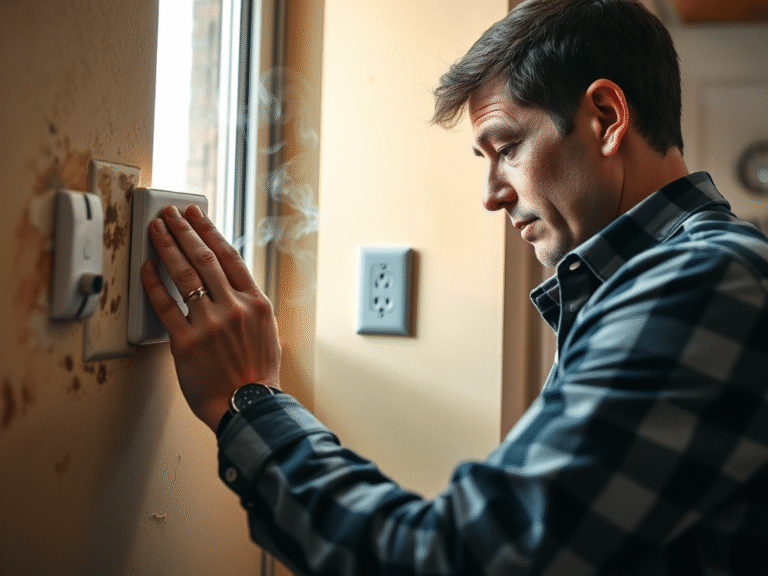
When homeowners or inspectors find dark staining on roof sheathing in Duncan, Ladysmith, Cowichan, Nanaimo, Parksville, Qualicum, Port Alberni, Campbell River, Courtenay, or Comox, the immediate concern often turns to mold. While mold can be a serious issue under certain conditions, not all mold-related staining presents a structural or health threat, especially when properly treated.
In this blog, we’ll explore why removing mold staining from roof sheathing is often not critical if the area has been heavily sprayed with an effective antimicrobial mold killer.
Understanding Mold Staining vs. Active Mold Growth
First, it’s important to distinguish between staining and active mold growth.
- Mold staining is the residual discoloration left behind after mold spores have been killed. It’s similar to a scar—it’s evidence of a previous issue but not necessarily a current one.
- Active mold can grow and spread, especially in environments with high moisture, poor ventilation, and organic material to feed on.
Mold staining doesn’t continue to grow. It’s simply the visual aftermath of what was once living but is now dead.
What Happens When Antimicrobial Mold Killers Are Applied?
When an antimicrobial mold killer is thoroughly applied to mold-contaminated sheathing:
- The mold spores are rendered inactive or killed, eliminating the biological threat.
- The treated surface is sanitized, reducing the risk of further spread.
- Future growth is inhibited, especially when combined with improved moisture control.
Our treatments are designed to penetrate porous surfaces like wood and neutralize microbial activity. Once this has occurred, the sheathing is no longer a source of airborne spores or a mold propagation site.
Why Removing Stains Is Often Unnecessary
1. Staining Is Cosmetic
Once the mold is dead, staining does not pose a structural or health hazard. Removing it typically involves sanding, dry ice blasting, replacing the insulation, HEPA Vacuuming the entire area, replacing wood, or using a corrosive bleach-type substance, which can be labor-intensive and costly without improving safety or performance.
2. Treated Wood Remains Structurally Sound
Unless the sheathing is rotted or structurally compromised, discoloration alone does not indicate damage. Treated mold-stained wood can still function perfectly within the roof system.
3. Inspection Standards Often Don’t Require It
Many building inspectors and mold remediation standards accept staining as an acceptable condition post-treatment, as long as the attic is sprayed and fogged with mold killer and there’s no active mold or moisture problem.
4. Prevention Is the Key
The most crucial factor in mold management is preventing recurrence, not removing every visual trace. Ensure the attic is well-ventilated, leaks are sealed, and insulation is adequate.
When Might Removal Be Necessary?
There are exceptions. You may need to remove stained sheathing if:
- The wood is soft, spongy, or structurally compromised.
- The staining is accompanied by ongoing moisture intrusion.
Conclusion
Removal is usually unnecessary if mold staining on your roof sheathing and attic has been thoroughly treated with a high-quality antimicrobial mold killer. The staining is a visual artifact, not a health or structural risk, provided the area remains dry and ventilated.
Focus your resources on prevention—controlling moisture, ensuring proper airflow, and monitoring the space. That’s the best defense against mold returning.
If you’re unsure whether mold in your attic requires further action, consult Pacific Decontamination Services. But rest assured: a stained but treated roof sheathing and attic is typically no cause for alarm.
What Can You Do? We Can Neutralize Your Mold!
In most situations, Pacific Decontamination Services can neutralize your mold up 99.99999%. If our spray, fog or foam can touch it, we can neutralize it. Our services come at a fraction of the cost as compared to the expensive approaches like soda / dry ice blasting, hepa vacuuming, scrubbing, removal of insulation and deconstruction and reconstruction of the attic and roof.
We neutralize the mold in your attic, crawl space, home, building, vehicle, or property by applying our eco-friendly, safe chemical on all surfaces and airborne, focusing our efforts on the visible mold areas. Depending on the job, we apply our formula by spray, mist, foam, or fog. We further kill all airborne mold spores in your attic. The average time of our on-site service is approximately one hour. An additional four hours is required to achieve maximum effectiveness. We ask that you stay out of the attic for approximately 5 hours in total. Read more about how we work.
Pacific Decontamination Services uses the world’s strongest, most effective and safe antimicrobial disinfectant, deodorization and chemical decontaminate. Our professional application will eliminate up to 99.99999% of any allergen, germ, bacteria or fungus that it touches. AND as powerful as it is, it is also completely safe.
What do you do next? How do you solve the challenge of mold and associated health hazards?
Call Pacific Decontamination Services at 778-269-0208 or email us at our email address: contact @ pacificdecon dot com
Serving All of Vancouver Island: Victoria, Cowichan, Duncan, Nanaimo, Parksville, Qualicum, Courtenay, Comox, Campbell River, and Port Alberni.