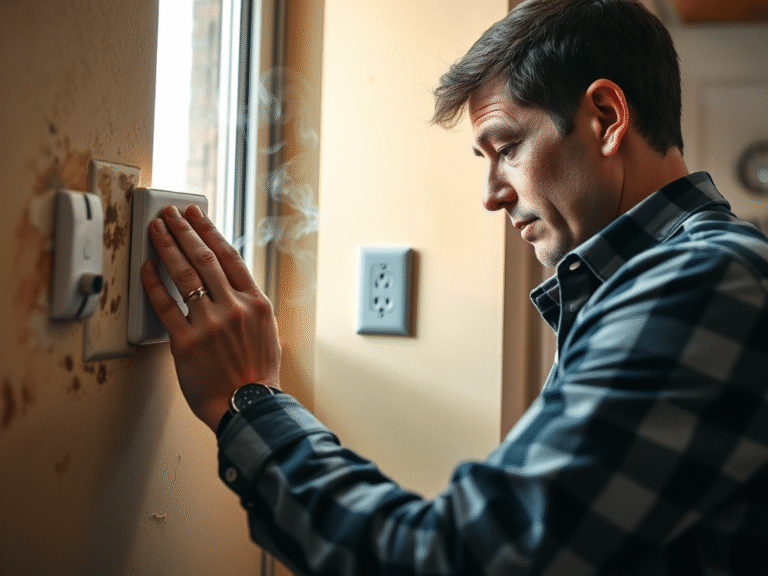
Finding white mold in your home, attic, crawl, or building is extremely common and may lead to health concerns for homeowners in Victoria, Cowichan, Duncan, Nanaimo, Parksville, Qualicum, Courtenay, Comox, Campbell River, and Port Alberni.
Finding mold in your residential or commercial property is problematic because of the way it can damage your property and how it can harm the health of anyone exposed to it. Mold, however, is a general term that encompasses a wide variety of mold species. In a general sense, mold growth in your home is harmful regardless of the specific type; however, the different qualities concerning each species make a great difference when determining how to properly deal with the mold growth problem.
White mold is an example of the fungus, but it isn’t just one type of mold. White mold describes a wide range of mold species that can appear white in color. Because of the white color quality of such mold species, white mold might be tough to identify. But as is with any mold, it’s essential that you can identify its presence so that you can have the mold growth properly addressed, and removed, to prevent further issues.
What is White Mold?
White mold is a term used to describe mold species that may be white in appearance and have a powdery texture. Among the species of white mold that are often found growing in homes are penicillium, Cladosporium, and aspergillus. However, white is just one of the colors that such mold can appear as. These mold species can also be black, gray, or green in color.
If mold is white in color, then it could be because their spores have no pigments, and this is determined by what kind of surface/material the mold has developed on. Sometimes, mold will be white in its early developmental stages and then change colors once spores have been produced.
What Causes Mold Growth?
Mold spores are naturally present in the air, so it’s not difficult for them to result in mold growth so long as they have the proper conditions. To grow, mold spores need a moisture source and a food source. Mold often uses building materials, such as wood and drywall, as a food source because those materials contain cellulose, a main organic food source for mold. That said, if your property’s building materials have suffered water damage, mold growth is likely to follow, because the mold spores have everything they need to flourish.
How Do You Identify White Mold?
Aside from its white appearance and powdery texture, white mold can usually be found growing on drywall, wood, and other building materials that contain cellulose. However, because of its white color, white mold can often be confused with other white substances, such as efflorescence and mildew.
Efflorescence is a salt deposit left behind by saltwater that evaporates. It has a white crystalline appearance and can be found on brick, concrete, or stone. These surfaces aren’t ones in which mold typically grows, so the affected surface can tell you whether a substance is white mold or efflorescence. You can also try to test the substance by dropping water onto it. If the substance dissolves, then it isn’t mold.
Mildew can be differentiated from white mold, too, by paying attention to the affected surface. For the most part, mildew will not grow on surfaces besides plants. If it does, it won’t cause the material damage that you can expect from white mold.
What Makes White Mold Hazardous?
As is the case with all species and types of mold, white mold is hazardous, because exposure to it can result in various health problems. Among the health issues white mold can cause include allergies, eye irritation, skin irritation, headaches, respiratory infections, nausea, and dizziness. Prolonged exposure can lead to even more severe problems, such as anxiety, depression, insomnia, and memory loss. Additionally, individuals with asthma are more likely to suffer from problems if exposed to mold.
In terms of your property, white mold is dangerous because of the way it uses building materials as a food source. The mold eats away at the material, compromising its structural integrity. With enough damage, your property’s structure can become unstable. This is why it’s important to act quickly with mold growth; you want to prevent any damage from getting really bad.
How Do You Treat White Mold?
If you encounter mold growth in your home or business, then you must act immediately to limit the damage that it can cause to your property and to you and anyone else who inhabits the space.
What Can You Do?
In most situations, Pacific Decontamination Services can neutralize your mold up 99.99999%. If our spray, fog or foam can touch it, we can neutralize it. Our services come at a fraction of the cost as compared to the expensive approaches like soda / dry ice blasting, hepa vacuuming, scrubbing, removal of insulation and deconstruction and reconstruction of the attic and roof.
Click Here to learn more. We neutralize the mold by applying our eco-friendly, safe chemical, focusing our efforts on the visible mold areas. Depending on the job, we apply our formula by spray, mist, foam, or fog. We further kill all airborne mold spores in your residence/property. The average time of our on-site service is approximately one hour. An additional four hours is required to achieve maximum effectiveness. We ask that you stay out for approximately 5 hours in total. Read more about how we work.
Pacific Decontamination Services uses the world’s strongest, most effective and safe antimicrobial disinfectant, deodorization and chemical decontaminate. Our professional application will eliminate up to 99.99999% of any allergen, germ, bacteria or fungus that it touches. AND as powerful as it is, it is also completely safe.
What do you do next? How do you solve the challenge of white mold and associated health hazards?
Call Pacific Decontamination Services at 778-269-0208 or email us at contact at pacificdecon.com
Serving All of Vancouver Island: Victoria, Cowichan, Duncan, Nanaimo, Parksville, Qualicum, Courtenay, Comox, Campbell River, and Port Alberni.