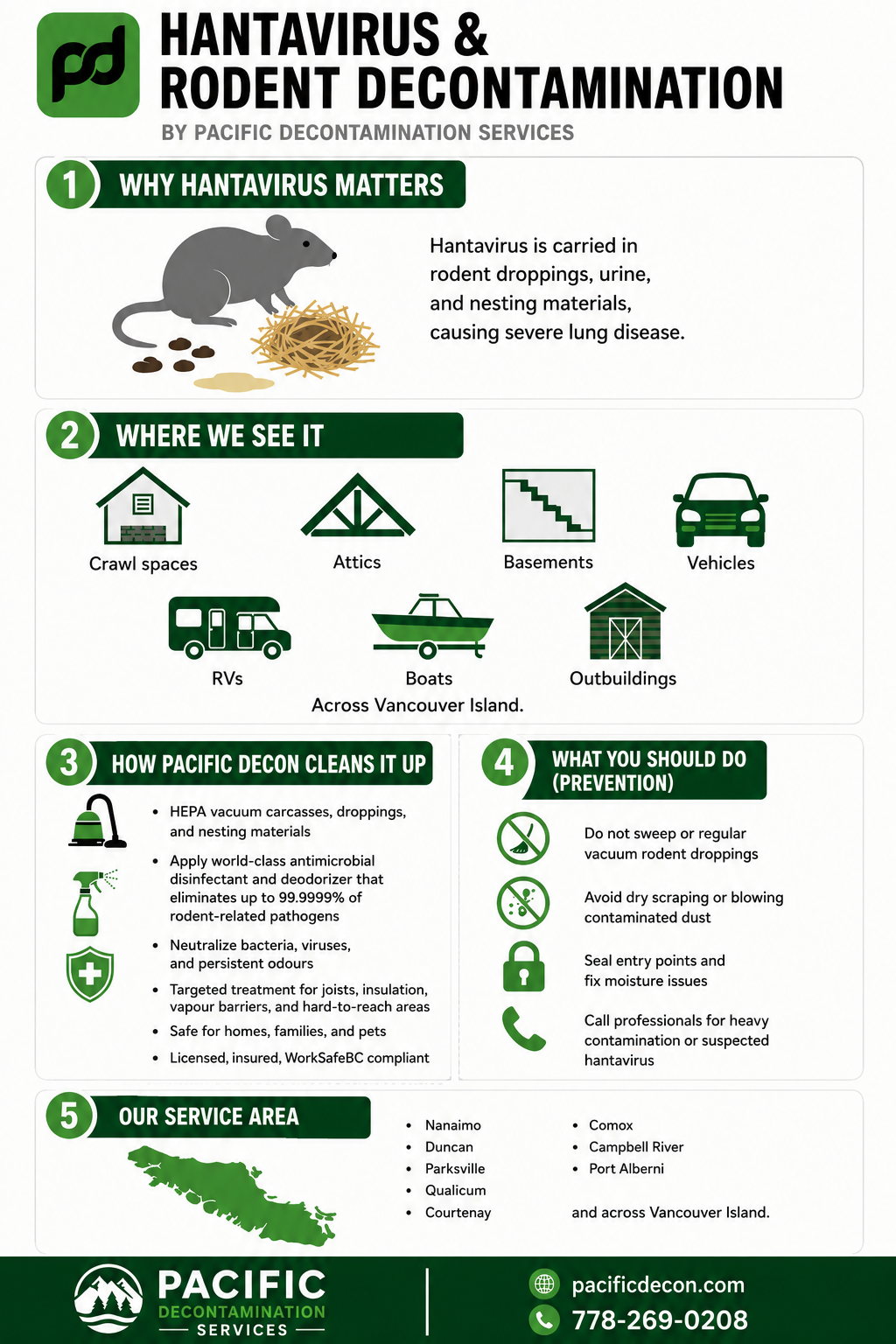
If you have rodents in your crawl space, attic, basement, RV, or outbuilding in Nanaimo, Ladysmith, Duncan, Parksville, Qualicum, Port Alberni, or anywhere on Vancouver Island, you are not just dealing with a nuisance—you may be facing a serious health risk called hantavirus. This virus is carried in rodent droppings, urine, and nesting materials, and when those materials are disturbed, microscopic particles can become airborne and be inhaled into the lungs.
On Vancouver Island, homeowners often discover rodent contamination when they go to store boxes, check insulation, or clean out a long‑ignored crawl space or cabin. That “spring‑cleaning” moment is exactly when many people unknowingly put themselves at risk.
How Hantavirus Spreads
Hantavirus is primarily spread by infected rodents such as mice and rats. The virus is present in:
- Droppings
- Urine
- Saliva
- Nesting materials
When these materials dry out and are swept, vacuumed, scraped, or blown with air, particles can become airborne and be inhaled into the lungs. That is why simply grabbing a broom or shop‑vac to “clean it up quickly” is one of the most dangerous things you can do.
Key points to remember:
- Do not dry‑sweep or use a regular vacuum on rodent droppings.
- Use wet cleaning methods and appropriate disinfectants so dust stays down and the virus is inactivated.
- Wear proper personal protective equipment (PPE), especially in confined spaces such as crawl spaces and attics.
Because there is no specific treatment or vaccine for hantavirus infection, prevention and safe cleanup are critical.
Why DIY Cleanup Can Be Dangerous
From the outside, rodent cleanup looks simple: remove droppings, maybe replace a bit of insulation, and you are done. The reality is more complicated.
Common DIY mistakes include:
- Sweeping or regular vacuuming, which can aerosolize contaminated dust.
- Going into confined spaces without respiratory protection, gloves, or eye protection.
- Disturbing contaminated insulation, vapor barriers, or joist cavities and spreading contamination further through the home.
When hantavirus is a concern, the stakes are high. This is where professional decontamination makes the difference.
How Pacific Decontamination Services Handles Rodent & Hantavirus Risk
Pacific Decontamination Services specializes in rodent decontamination and biohazard cleanup for homes, crawl spaces, attics, basements, vehicles, RVs, boats, and outbuildings across Vancouver Island. The process is designed to remove visible contamination, neutralize viruses and bacteria, and restore safer indoor air quality.
1. Inspection and Hazard Assessment
Every project begins with a detailed inspection of the contaminated area—crawl space, attic, basement, vehicle, or structure—to understand:
- The extent and location of droppings, carcasses, and nests
- How rodents are entering and moving through the space
- Ventilation, moisture, and structural issues contributing to the problem
This assessment supports a safe work plan that aligns with professional expectations for confined spaces and biological hazards.
2. HEPA Vacuum Removal of Droppings, Nests, and Carcasses
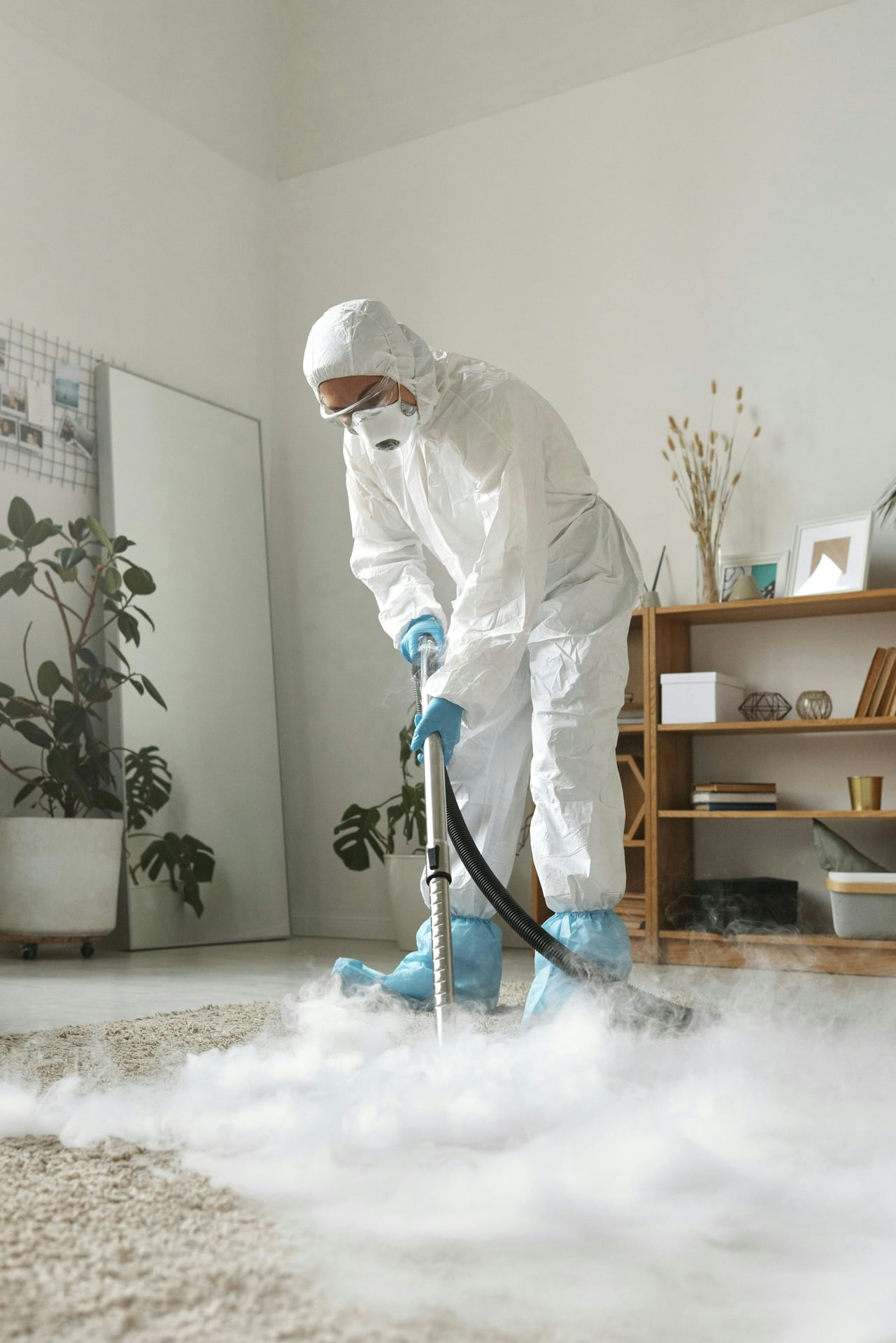
Instead of using a regular vacuum or broom, Pacific Decon uses professional HEPA vacuum systems designed to capture very fine particles, including the dust that can carry hantavirus.
Technicians HEPA vacuum:
- Rodent carcasses
- Droppings and urine‑soaked materials
- Nesting materials tucked into joists, insulation, and corners
This deep vacuuming step helps prevent contaminated dust from being pushed back into the air you breathe.
3. Application of High‑Level Antimicrobial Disinfectant
Once the bulk contamination is removed, a professional‑grade antimicrobial disinfectant and deodorizer is applied throughout the affected areas.
This treatment:
- Neutralizes rodent‑related bacteria and pathogens
- Eliminates a very high percentage of targeted microorganisms on treated surfaces
- Deodorizes persistent rodent odours to improve indoor comfort
Surfaces such as crawl space subfloors and joists, attic sheathing and framing, basement surfaces, and hard‑to‑reach corners are carefully treated for a thorough decontamination.
4. Focus on Air Quality and Odour Control
Rodent infestations do not just leave a visible mess; they also impact air quality. Over time, droppings, urine, and nesting material can release odours and particles into the home.
By combining HEPA vacuuming with advanced antimicrobial and deodorization products, Pacific Decon works to reduce:
- Airborne particulates from droppings and nesting materials
- Odours related to rodent urine and carcasses
- Microbial contaminants that can continue to circulate if left untreated
This is especially important in crawl spaces and attics that share air pathways with main living areas.
5. Safe for Homes, Families, and Pets
Pacific Decontamination Services uses an eco‑conscious professional disinfectant system that is both highly effective and safe when applied correctly by trained technicians. Their approach is designed to:
- Reduce health risks rather than adding new chemical risks
- Respect sensitive environments where children and pets live
- Support long‑term prevention by tackling both contamination and odour that can attract rodents back
What Homeowners Can Do for Prevention
While the heavy cleaning and decontamination should be left to professionals, there are practical steps you can take to reduce your risk of hantavirus and future rodent infestations.
Avoid Dangerous Cleaning Practices
- Do not sweep, vacuum, or blow rodent droppings, urine, or nests with air.
- Do not use household vacuums that lack true HEPA filtration in contaminated spaces.
Use Safer Basic Cleaning Methods (For Minor Issues Only)
For small, isolated incidents in a well‑ventilated area:
- Ventilate the area before cleaning.
- Wear disposable gloves and, where appropriate, a respirator.
- Thoroughly wet droppings and contaminated surfaces with a disinfectant and let it sit for the recommended contact time.
- Wipe up with disposable towels and double‑bag contaminated waste before disposal.
If the contamination is anything more than minor and isolated—or if it involves crawl spaces, attics, basements, or long‑term rodent activity—call professionals.
Make Your Property Less Attractive to Rodents
- Seal gaps around pipes, vents, and foundation openings.
- Store food and pet food in rodent‑proof containers.
- Reduce clutter where rodents can nest in garages, sheds, and crawl spaces.
- Manage yard debris and wood piles away from the home’s foundation.
When to Call Pacific Decontamination Services
You should contact Pacific Decontamination Services if:
- You see widespread droppings in a crawl space, attic, basement, or outbuilding.
- You discover dead rodents or heavy nesting material.
- You are concerned about hantavirus risk in a confined space.
- Odours from a rodent problem are lingering in your living areas.
Pacific Decon provides complete rodent decontamination with professional HEPA vacuuming, high‑level antimicrobial treatment, and odour control across Vancouver Island communities. If you suspect hantavirus‑related contamination, do not put yourself in harm’s way—leave the rodent cleanup to the experts.