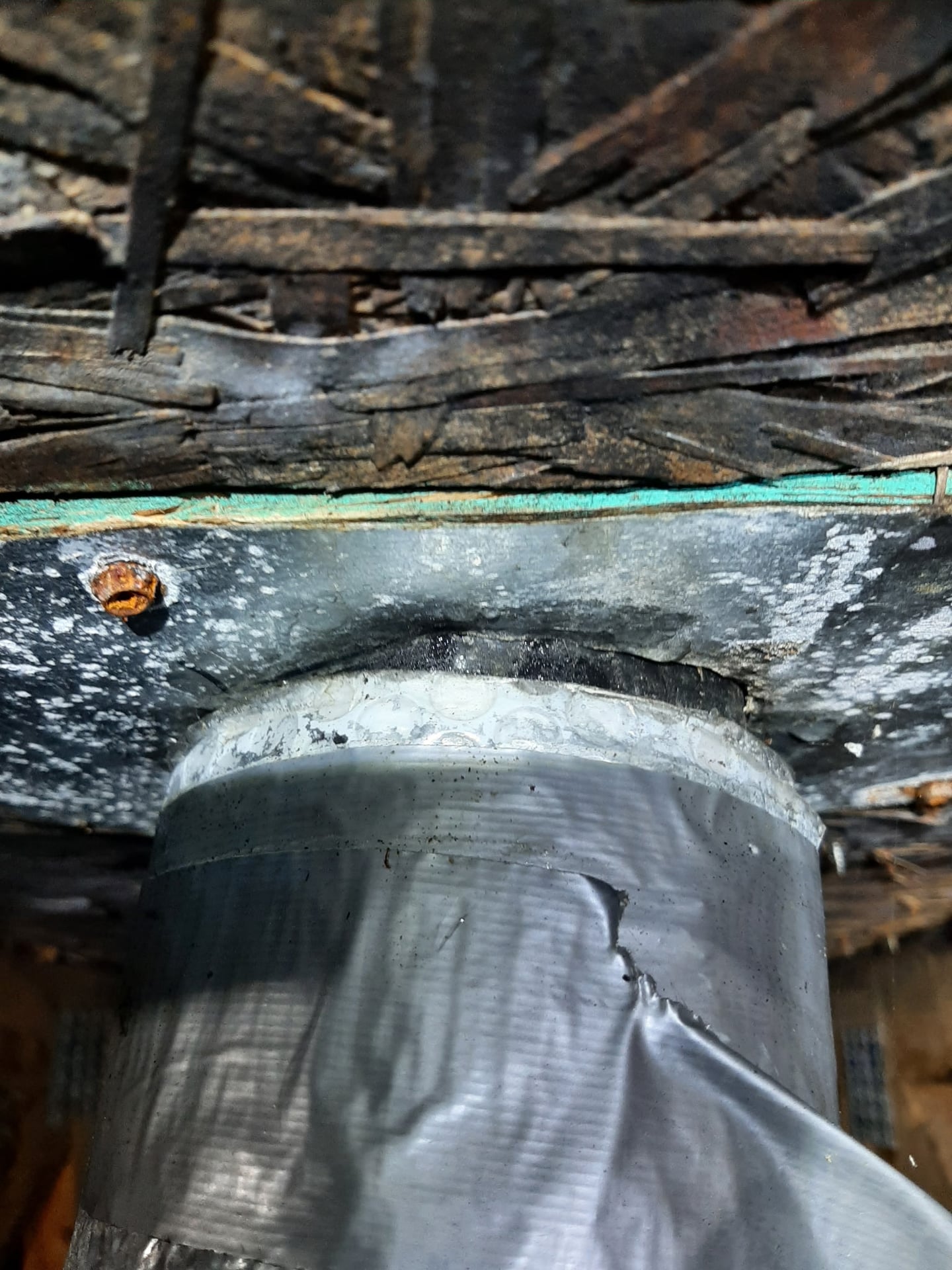
Bleach does not break the mold lifecycle. Wiping down mold with bleach does not solve the problem in homes, offices, crawlspaces, basements, attics, vehicles for homeowners in Victoria, Cowichan, Duncan, Nanaimo, Parksville, Qualicum, Courtenay, Comox, Campbell River, and Port Alberni,
Does Bleach Kill Mold?
There is a lot of misinformation about bleach and mold.
A quick internet search pulls up all kinds of conflicting information about bleach and mold. Some articles state emphatically that bleach kills mold while others caution against using bleach to remove mold.
The United States of America OSHA (Occupational Safety and Health Administration) was one of the first federal agencies to STOP recommending the use of liquid bleach for mold remediation.
What is Bleach?
Bleach is the generic term that describes a variety of chemicals used to whiten clothes, lighten hair colors, and remove stains. Additionally, most types of bleach will disinfect and sterilize germs and bacteria. While there are several types of bleach, chlorine bleach is a common household bleach.
Does Bleach Kill Mold?
Yes. But… germs and bacteria, like salmonella and influenza, require a host to thrive. While they will live for a period of time outside the body, they will eventually die without a host. This makes cleaning with bleach an effective way to kill germs and bacteria because they don’t have the means to reproduce outside of a host.
Mold is much more complicated than that. Hence why it causes far greater destruction than a virus.
Mold is a naturally occurring airborne fungus that aids in the decomposition of organic materials. If you have mold growing in your home, you also have mold spores in the air. Instead of an animal or human host, mold lives on organic material and moisture.
Since mold spores can “soak into” a surface, mold can outrun bleach. A virus or bacteria can’t do that because they live on surfaces. So if you catch a mold spore at the right moment, bleach may be able to remove it but it could also cause some other issues along the way. Read more about mold, mold spores and health concerns here.
Reasons Why You May Not Want to Use Bleach to Kill Mold
1. Bleach Does What It Does Best – It Bleaches
2. Bleach Can Only Reach Surface Mold
In case you didn’t know, mold is not just on the surface of something. It roots and it often roots deeply. This is a survival mechanism. Mold doesn’t want to be removed. As such, you can’t kill any mold with a product that only reaches the surfaces.
Bleach only reaches the mold on the surface without affecting the membrane underneath. You need to kill and remove this underlying membrane to effectively remove the mold growth and prevent it from returning. Bleach cleaners cannot kill this membrane because its chemical structure prevents it from penetrating porous surfaces. This causes the mold membranes to move deeper into the affected surface to hide from the bleach.
3. Bleach Causes More Mold Growth
Bleach has been proven to actually cause additional mold growth.
When bleach is introduced to mold colonies, the mold recognizes the bleach as a threat and reacts. This means that it begins to reproduce at a rapid rate. It roots deeper and grows stronger.
Bleach also contains 90% water and mold loves moisture obviously. When bleach is applied, the chlorine quickly evaporates after use leaving behind a ton of water. This water often soaks into the surface allowing the mold to grow more in this moist environment. So in effect, using bleach actually feeds the internal mold spores!
4. Chlorine Bleach Loses Its Effectiveness Over Time
Chlorine bleach rapidly loses its effectiveness. When exposed to air, chlorine evaporates. This means that you might have a bottle of bleach that is basically useless. Basically, you would be pouring water on mold spores which as we just discussed is not a good solution.
5. Using Bleach To Kill Mold Is Toxic
Chlorine bleach produces fumes that pollute the air and can become harmful to both humans and pets. Chlorine bleach also generates a by-product called dioxin, which is linked to cancer. Used over time, bleach builds up these pollutants in the environment. If you are battling mold the last thing you need to introduce are more toxins.
Another disadvantage of bleach is that it can damage the materials it’s used on as it is a harsh, corrosive chemical.
A simple study was conducted by the University of Oregon State. One of the purposes of the study was to examine if bleach can prevent or remove mold growth from Douglas-fir Lumber. The study found that “While bleach is often recommended for remediation of surface mold on wood, our results illustrate that the treatment does not eliminate the surface microflora. As a result, an important component of remediation must be drying to moisture levels below 20 percent (the generally accepted level for inhibiting growth of fungi on wood) (Zabel and Morrell 1992). In the absence of drying, some fungi clearly survive the treatment and may re-colonize the surface”
Some Facts About Bleach and Mold
United States of America EPA and OSHA have specifically advised against the use of bleach for mold remediation.
Bleach will only remove the stain from mold. The surface will appear clean but internal roots will continue to grow.
Using bleach to kill mold will encourage toxic mold to grow faster and stronger.
Bleach itself is considered a toxic chemical and is classified the same as gasoline. In its gaseous form (room temperature) chlorine releases Dioxins, a known cancer causing compound.
Your bleach may have already lost its effectiveness rendering it as useless as water to remove mold.
If Not Bleach, What Do You Do?
The best treatment to break the mold life cycle is treatment by Pacific Decontamination Services to keep mold spores from repopulating.
What We Do – We Also Neutralize All Airborne, Surface and Root Mold Spores!
In most situations, Pacific Decontamination Services can neutralize your mold up 99.99999%. If our spray, fog or foam can touch it, we can neutralize it. Our services come at a fraction of the cost as compared to the expensive approaches like soda / dry ice blasting, hepa vacuuming, scrubbing, removal of insulation and deconstruction and reconstruction of the attic and roof.
We neutralize the mold in your attic, crawl space, home, building, vehicle, or property by applying our eco-friendly, safe chemical on all surfaces, roots and airborne, focusing our efforts on the visible mold areas. Depending on the job, we apply our formula by spray, mist, foam, or fog. We further kill all airborne mold spores. The average time of our on-site service is approximately one hour. An additional four hours is required to achieve maximum effectiveness. We ask that you stay out of the attic for approximately 5 hours in total. Read more about how we work.
Pacific Decontamination Services uses the world’s strongest, most effective and safe antimicrobial disinfectant, deodorization and chemical decontaminate. Our professional application will eliminate up to 99.99999% of any allergen, germ, bacteria or fungus that it touches. AND as powerful as it is, it is also completely safe.
What do you do next? How do you solve the challenge of mold and associated health hazards?
Call Pacific Decontamination Services at 778-269-0208 or email us at our email address: contact @ pacificdecon dot com
Serving All of Vancouver Island: Victoria, Cowichan, Duncan, Nanaimo, Parksville, Qualicum, Courtenay, Comox, Campbell River, and Port Alberni.